



Injection moulding
注塑成型
In plain words
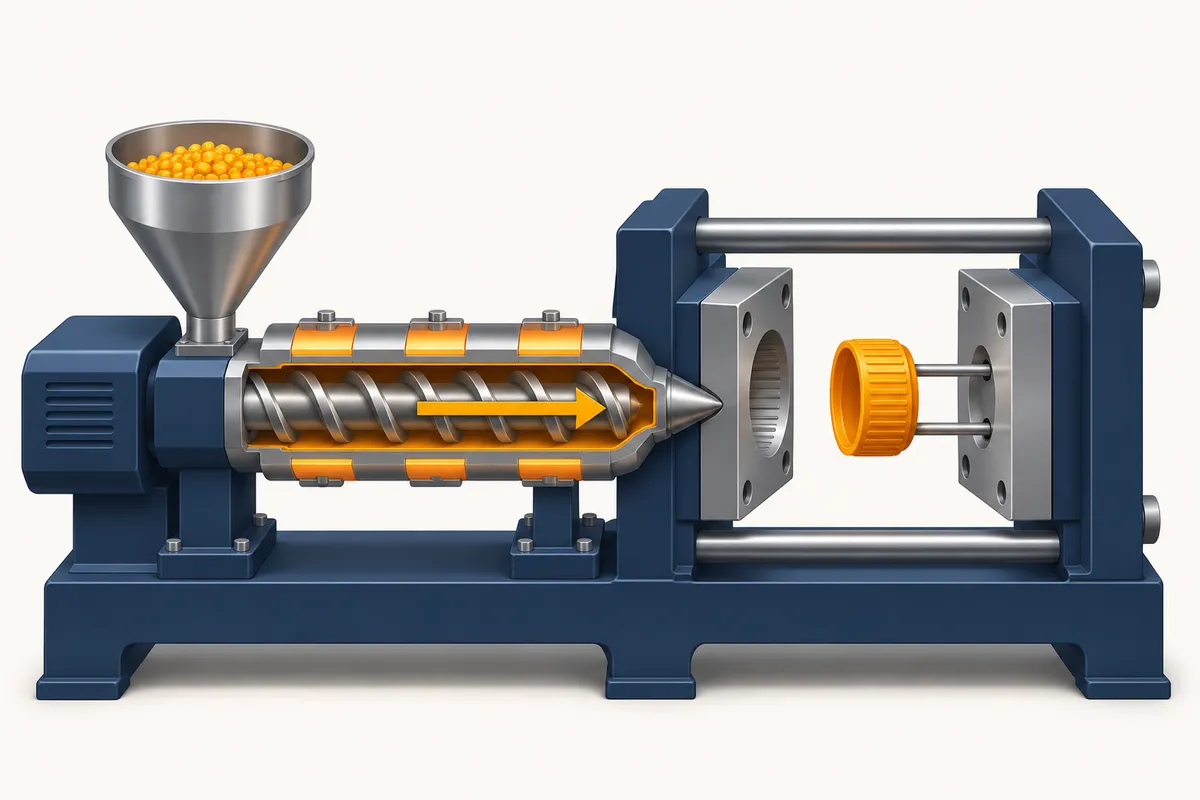
Melted plastic is squirted into a steel mould, cools in seconds and pops out, again and again: most plastic things around you were made this way. The mould is expensive, so for a handful of parts it is cheaper to machine them.
What it is
Molten plastic is injected into a closed steel or aluminium mould, cooled and ejected, in a cycle of seconds to about a minute, so the part cost is low once the mould exists. The mould is expensive and takes weeks (139), so moulding usually pays from a few thousand parts, depending on the mould's price and the saving per part; below that, parts are machined from plastic (129) or printed. Good moulded parts have even wall thickness, draft on walls, ribs instead of thick sections, and no undercuts unless paid for with sliding cores in the mould.
Why it matters for products
The break-even between machined and moulded plastic parts is a process-selection rule; many shops machine the prototypes and the short runs needed while the mould is being built, then make or repair the mould itself.
Learn first
Opens the way to
Making a part like this? Plan the process and estimate costs in Workspace.