


Anodizing
阳极氧化
In plain words
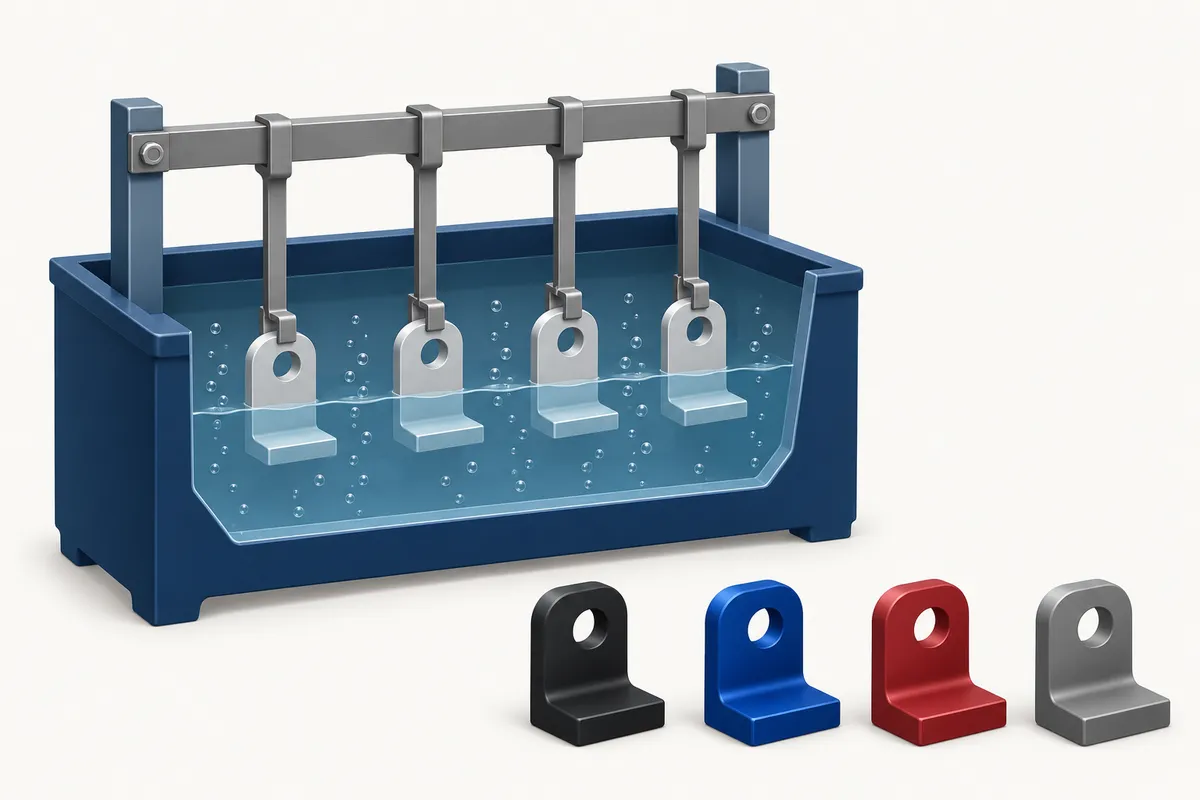
Aluminium is dipped in an acid bath with electric current, and its surface turns into a hard, thin skin of oxide that can be dyed many colours, like the coloured shell of a phone or a bike part. The skin also grows outwards, so very exact holes must be protected or made slightly bigger.
What it is
An electrochemical treatment that grows a hard oxide layer out of the aluminium itself. Normal (sulphuric acid, Type II) anodizing gives a layer of about 5 to 25 µm that can be dyed black, red, blue and other colours; hard anodizing (Type III) gives a thicker, very wear-resistant grey to dark layer, commonly 25 to 50 µm. The layer grows roughly half into the metal and half outwards, so sizes change: precise bores and threads are masked or machined with an allowance. Parts hang on racks that leave small contact marks, the layer does not conduct electricity (grounding points are masked), colours vary between batches and alloys, and cast alloys with much silicon anodize poorly.
Why it matters for products
The most common finish on aluminium CNC parts, usually done by a subcontractor, priced by area, by piece or by rack load with a minimum batch charge, adding days; the drawing has to give type, colour and masking.
Learn first
Opens the way to
Making a part like this? Plan the process and estimate costs in Workspace.