



Powder metallurgy and metal injection moulding
粉末冶金与金属注射成型
In plain words
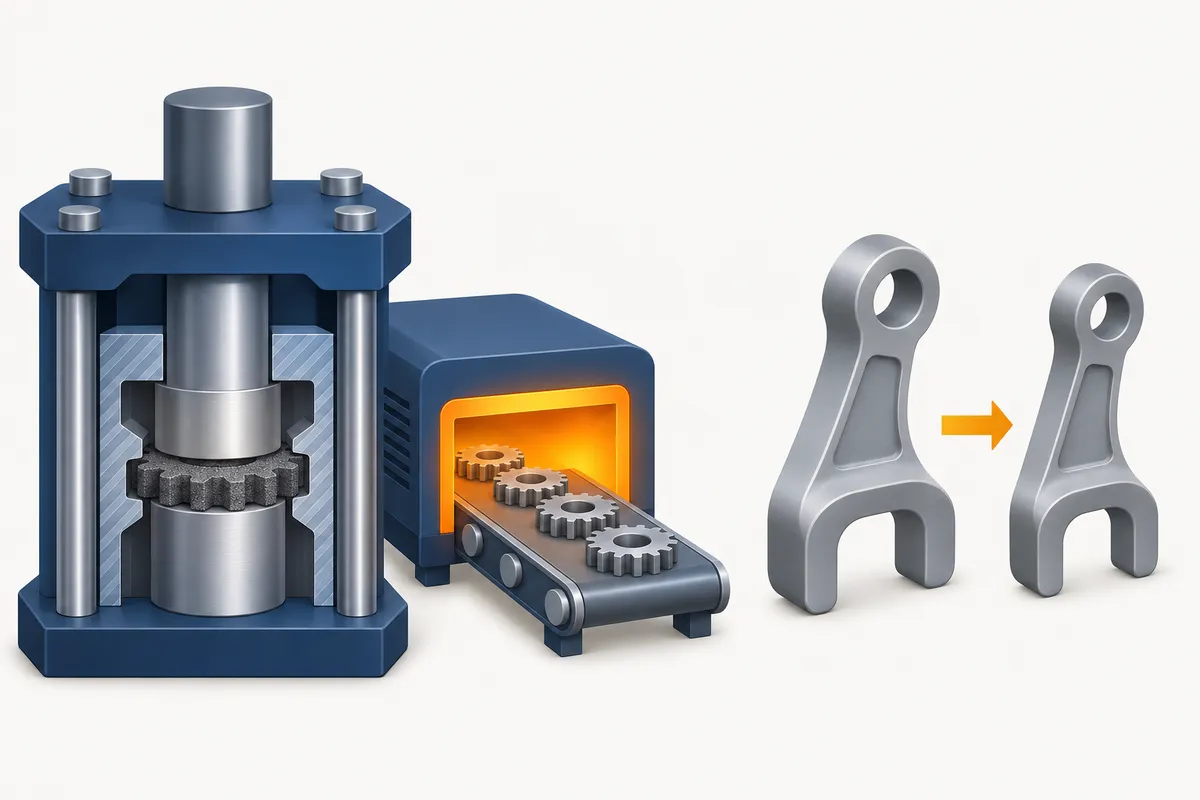
Instead of cutting a part from solid metal, you press metal powder into a mould, like packing damp sand into a bucket, then bake it until the grains stick together. A finer version mixes the powder with plastic, squirts it into a mould like a toy, removes the plastic and bakes the rest, which shrinks to size. For many thousands of small parts this can be much cheaper than machining each one.
What it is
Two ways to make small metal parts in large numbers from powder. In press-and-sinter powder metallurgy, metal powder is pressed to shape in a die and then sintered: heated below melting in a protective atmosphere so the grains bond. It makes gears, cams, bushes and car parts, and porous bronze or iron bearings soaked in oil that lubricate themselves. Shapes must press out of a die, and some porosity remains. Metal injection moulding (MIM) mixes very fine powder with a plastic binder, injects it into a mould like plastic (155), removes the binder and sinters the rest; the part shrinks by roughly 15 to 20% in each direction, so the mould is made oversize. MIM makes small, complex parts, typically under about 100 g, in stainless and low-alloy steel for phones, locks and medical tools. Both need costly tooling and pay only at high volume, and tight features are sized, reamed, tapped or ground afterwards.
Why it matters for products
At volume a small turned or milled part may be cheaper made this way (82, 89); the quote compares tooling plus piece price and secondary machining against machining from bar.
Learn first
Making a part like this? Plan the process and estimate costs in Workspace.