



Weldments and machining after welding
焊接件与焊后加工
In plain words
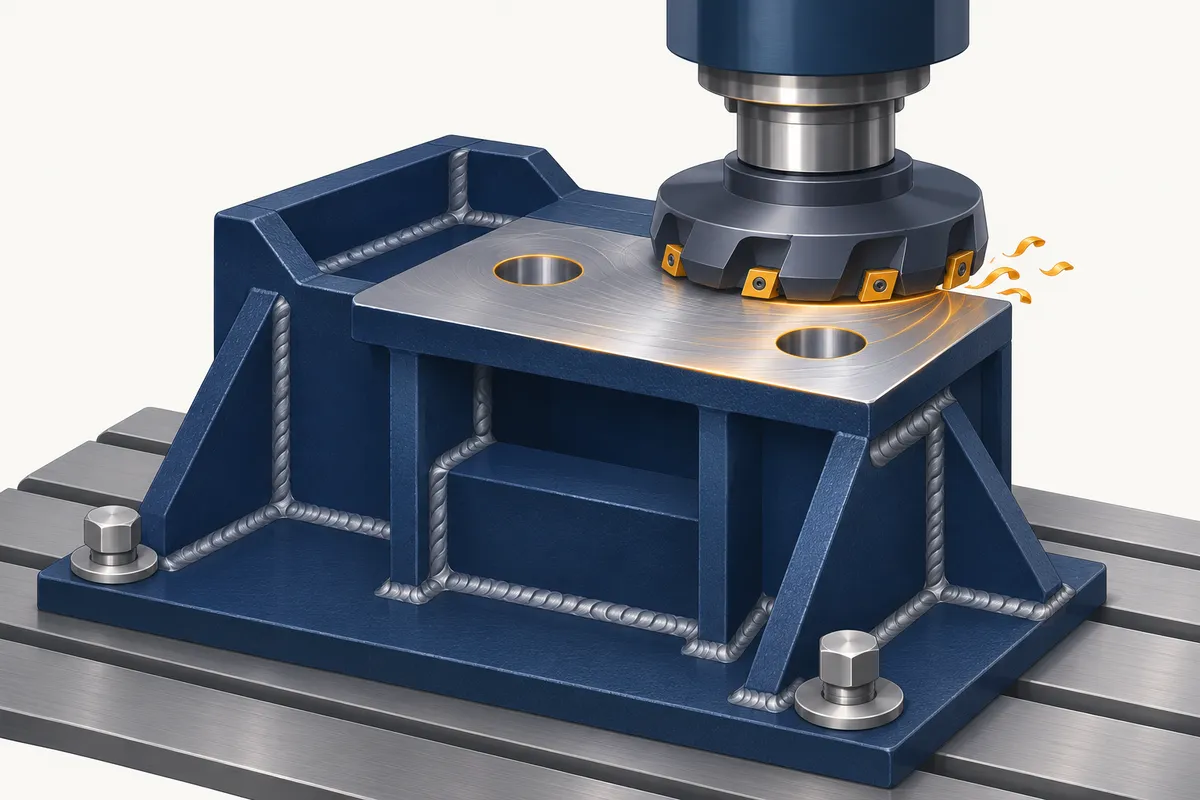
Big machine frames are often welded together from steel plates instead of cast. Welding cannot be precise, so afterwards, usually after a slow heating that lets the metal relax, the important faces and holes are machined to size.
What it is
Machine bases, frames, gearbox housings and heavy brackets are often built from plate and tube welded together instead of cast or cut from a block. Welding cannot hold tight tolerances, so the faces, bores and threads that matter are machined afterwards, with a few millimetres of allowance left on them. The weldment is usually stress-relieved first, heated slowly in a furnace or treated by vibration, so that it does not move when material is cut away. Large weldments need large machines, such as gantry mills and floor-type boring mills, and their first setup has to find the part's position on rough, uneven surfaces.
Why it matters for products
A fabricated and machined part is two quotes in one: fabrication (cut, bend, weld, stress relieve) and the machining of the functional faces, set up on an irregular part much like a casting.
Learn first
Making a part like this? Plan the process and estimate costs in Workspace.