



Weld joints and welding symbols
焊缝形式与焊接符号
In plain words
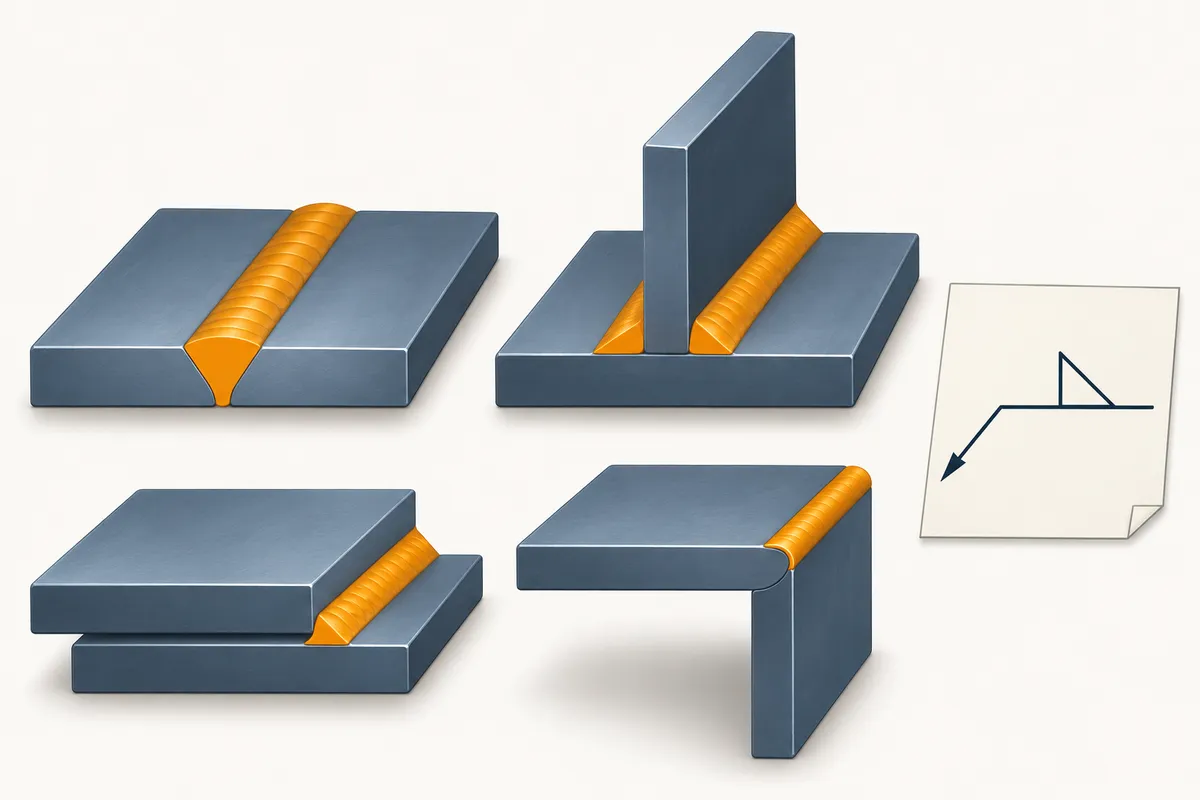
Welds hide in corners and seams, so the drawing uses a small arrow with symbols to say where to weld, what shape of weld and how big. A weld twice as big takes about four times the metal and time.
What it is
Parts meet in butt, T, lap, corner or edge joints. A fillet weld fills the inside corner of a T or lap joint and is sized by its leg or throat. A groove weld joins plates edge to edge; on thick plate the edges are bevelled (V, U or J) so the weld can fuse through the full thickness. The drawing calls each weld up with a welding symbol (ISO 2553, AWS A2.4, GB/T 324 in China): an arrow to the joint, a reference line, and marks for the weld type, size, length, all-round and site welds; the three standards draw some of these marks differently. The amount of weld metal grows with the square of the size, so a fillet with twice the leg needs about four times the metal and time.
Why it matters for products
A weld quote reads joint type, size and length from the drawing; oversized welds called up by habit are a common cost worth questioning.
Learn first
Making a part like this? Plan the process and estimate costs in Workspace.