



Quality planning: FMEA and control plans
质量策划:FMEA与控制计划
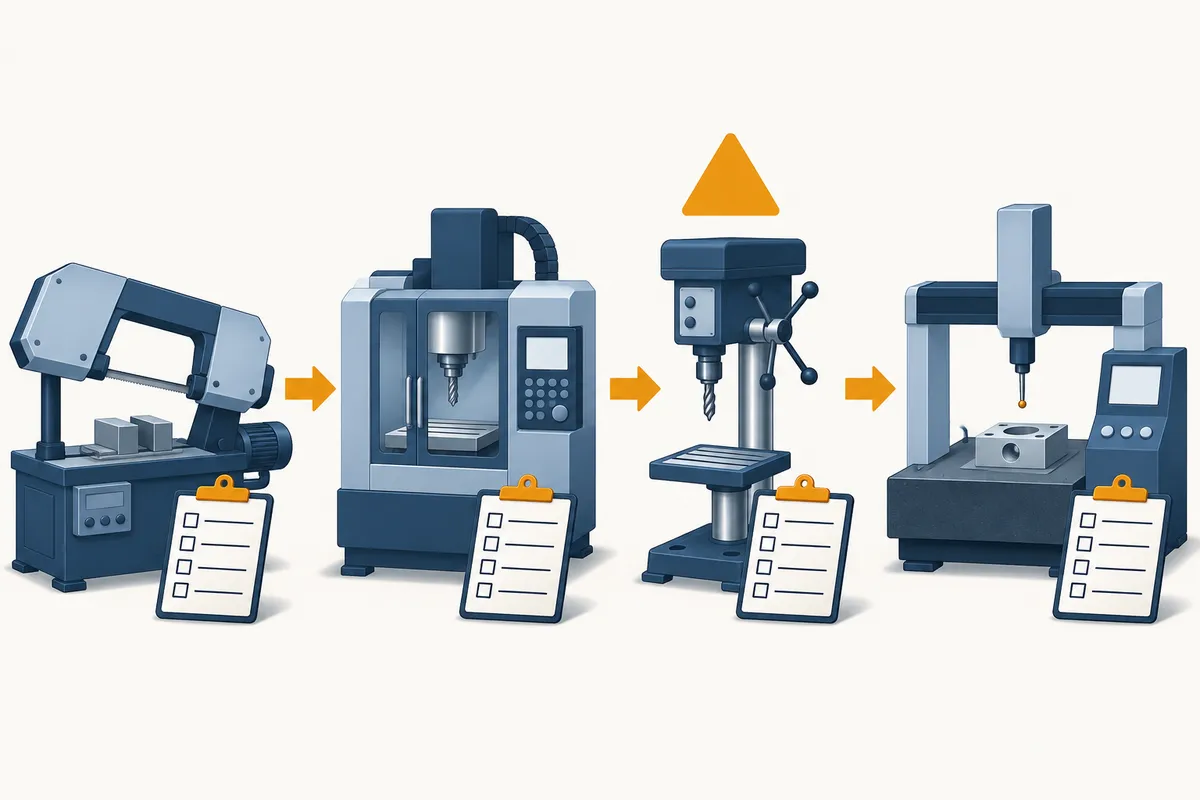
In plain words
Before making thousands of parts for a car maker, the shop goes through every step and asks: what could go wrong here, how bad would it be, and would we notice? The worst risks get fixed first. The answers become a written plan of what to check, how and how often, which the customer approves before production starts.
What it is
Production customers, led by the car industry, want a supplier to plan quality before the first batch, not only to inspect it. APQP (advanced product quality planning) frames the work in phases from planning to launch. In a process FMEA (failure mode and effects analysis) a team goes through each operation, lists what can go wrong, and rates severity, occurrence and detection; the three ratings were traditionally multiplied into a risk priority number, while the 2019 AIAG and VDA handbook ranks risks by an action priority table instead. The highest risks get fixes such as an error-proofing fixture, a better gauge or an extra check. The control plan then lists, for each operation, the characteristics that matter, how each is measured, the sample size and frequency, and what to do when a result is out. PPAP gathers these with gauge studies (117), capability results (59) and sample measurements into the approval package (51).
Why it matters for products
Documents production customers demand from suppliers; a quality module keeps FMEA, control plan and inspection records linked, so each check in the MES traces back to the risk it covers.
Learn first
Making a part like this? Plan the process and estimate costs in Workspace.