



Appearance standards
外观标准与外观等级
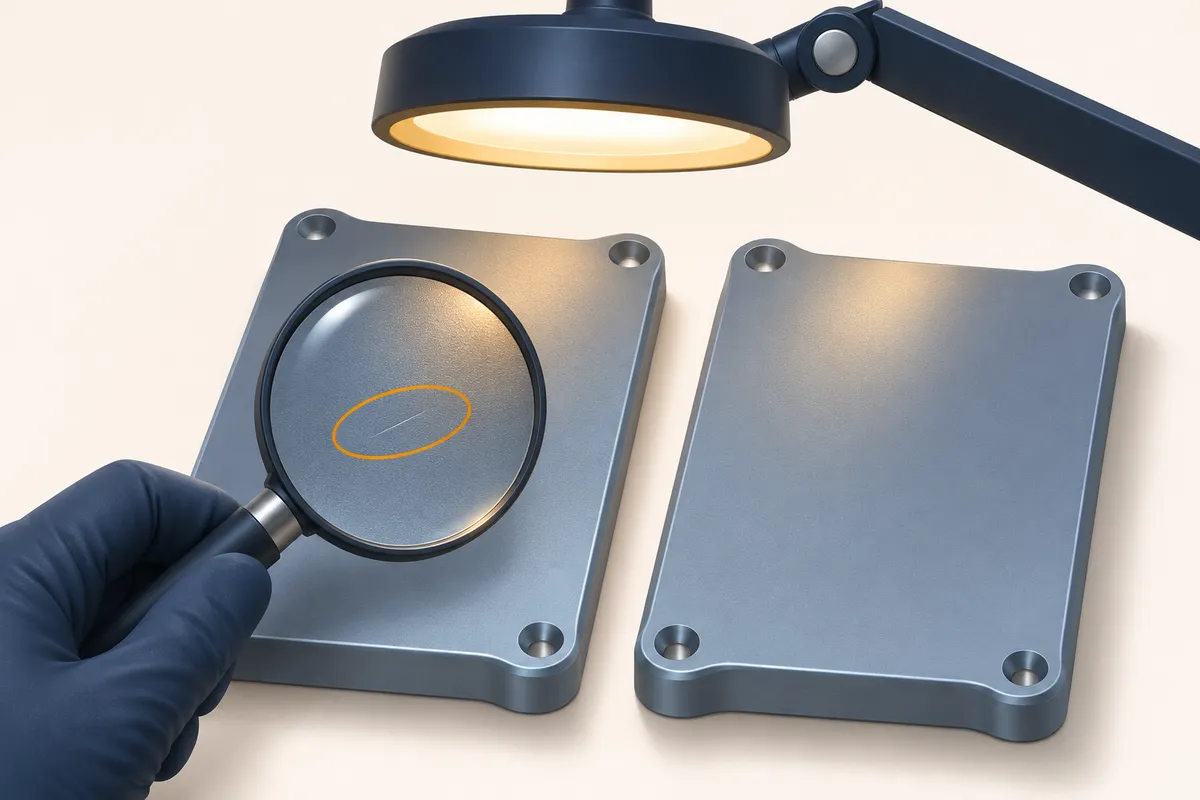
In plain words
A part can be exactly the right size and still look wrong: a scratch, a dent or a slightly different colour on the face a customer sees. Appearance grades say which faces matter most and how many and how big the marks may be, judged from a set distance in set light. Without that written down, “looks fine” and “looks bad” end in an argument.
What it is
A part can be in tolerance and still be rejected for how it looks. An appearance standard sorts the faces of a part by how visible they are, commonly A faces a user sees first, B faces seen less often and C faces hidden inside, and for each grade limits scratches, dents, pits, tool marks and rack marks by size, number and spacing. It also sets the allowed colour difference (色差) against an approved sample, and how parts are judged: at a set viewing distance, under set lighting, for a set time. Machining-only parts may show tool marks; cosmetic parts need careful clamping, protective film, separate packing, extra finishing passes and more rejects. On-demand platforms offer grades such as standard and premium, with photos before shipping for the higher one. Vague wording such as "no visible defects" is one of the most common causes of disputes, and a signed limit sample (限度样品) settles more arguments than words.
Why it matters for products
The cosmetic grade changes finishing, handling, packing, inspection and scrap cost, so it belongs in the quote as an option tied to a written standard.
Learn first
Making a part like this? Plan the process and estimate costs in Workspace.