



Making parts from a sample
来样加工与测绘
In plain words
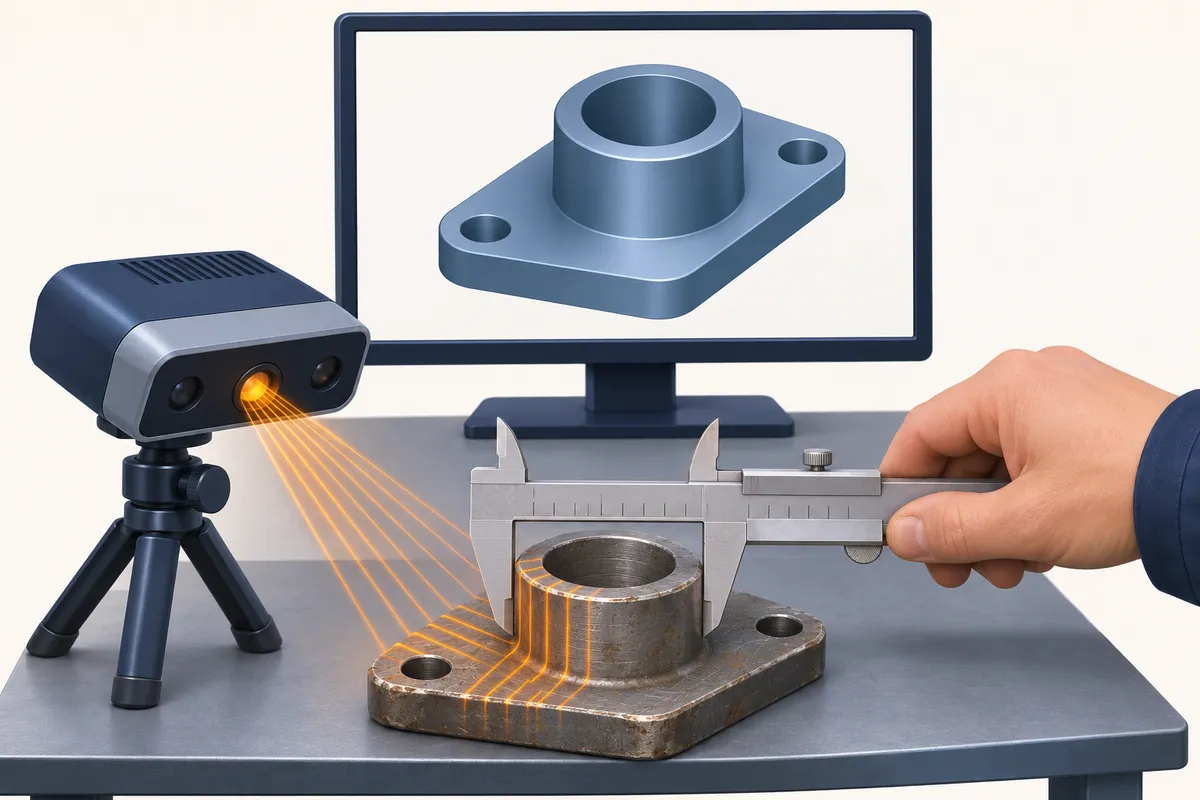
Sometimes a customer has no drawing at all, only an old or broken part and the words “make me another”. The shop measures it, draws it again and works out what the sizes and metal were meant to be, a bit like copying a recipe by tasting the cake. A worn part can mislead, so the customer approves the new drawing before any metal is cut.
What it is
A customer sends a physical part, often worn or broken, and asks for copies, with no drawing or model. The shop first has to work out what the part was meant to be. It measures it by hand (184), on a CMM (60) or with a 3D scanner (185), which Chinese shops call 抄数 when it is scanned, then builds a model and a drawing. Measuring gives the sizes of this one piece, not the intended ones: a worn bore has grown, a bent shaft is no longer straight, and the original tolerances, fits, material and heat treatment are written nowhere. The shop rounds sizes to sensible nominal values, chooses fits from how the part meets its neighbours (47), narrows down the material's condition with a hardness test and confirms the alloy by a composition (spectrometer) check, and asks the customer to approve the new drawing before cutting metal.
Why it matters for products
Measuring and redrawing is a paid step before the real quote, with its own time and risk; a part that arrives as a sample needs an intake path that does not expect a file, and the approved drawing becomes the record for repeat orders.
Learn first
Making a part like this? Plan the process and estimate costs in Workspace.