



Machining allowance and process dimensions
加工余量与工序尺寸
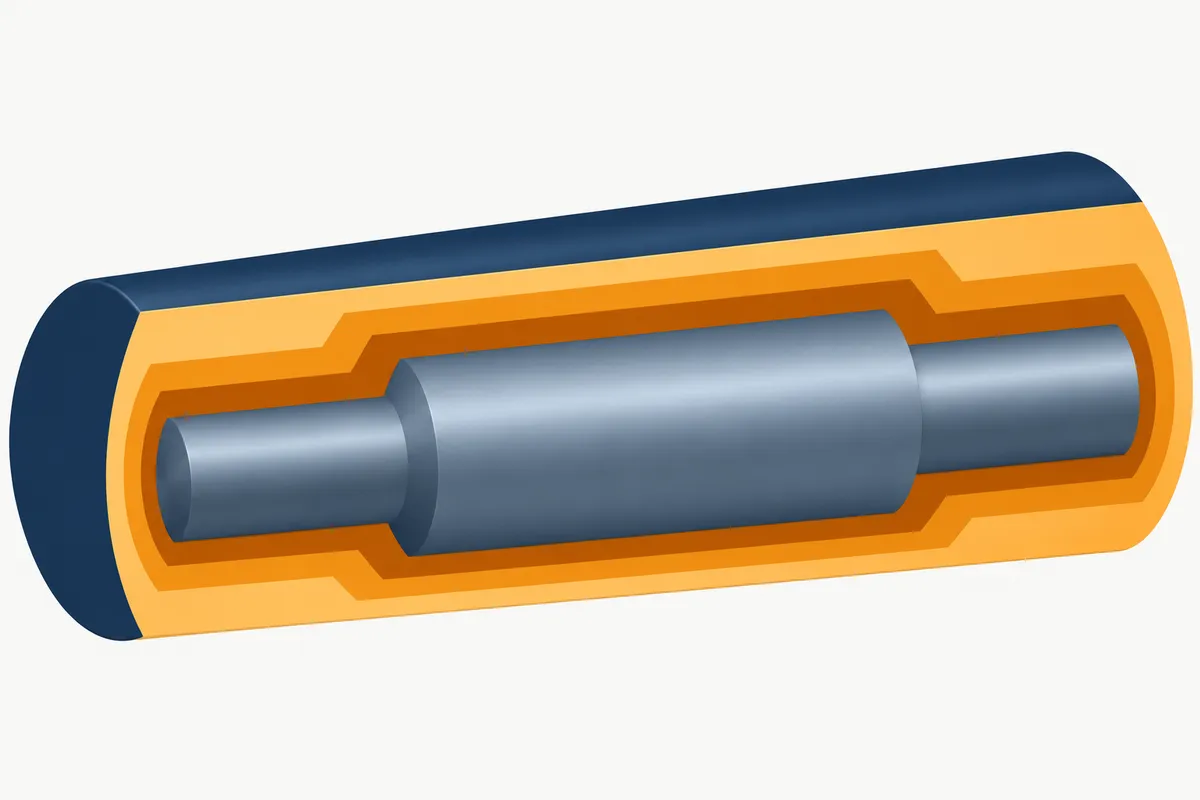
In plain words
Each cutting step leaves a thin extra layer for the next, more careful step, like a tailor who cuts cloth a little big before the final fitting. Planners work backwards from the finished size to decide how big the part must be after every step, and how big a piece of raw metal to start with.
What it is
Every operation leaves stock for the next. The machining allowance is that layer, given per side or on the diameter: typically several millimetres on a sand casting, about 0.5 to 2 mm on a diameter left by rough turning, and a few tenths of a millimetre on a diameter for grinding (136). It covers the previous operation's tolerance, scale or damaged skin, setup error and heat-treatment distortion (165). Planners work backwards from the drawing: the finished size and tolerance give the size the previous operation must hold, with that operation's looser tolerance, and so on back to the blank (30). When an operation locates or measures from a different face than the drawing dimension uses, the operator must hold a different dimension, worked out with a process dimension chain (工艺尺寸链), and its tolerance is often tighter than the one on the drawing. A case-hardened face (161) is a similar problem: the case depth before grinding must allow for the metal ground away.
Why it matters for products
CAPP (50) and estimating need allowance tables per operation and material; they set the blank size and the time for every pass.
Learn first
Making a part like this? Plan the process and estimate costs in Workspace.