



Tool regrinding and reconditioning
刀具刃磨与修磨
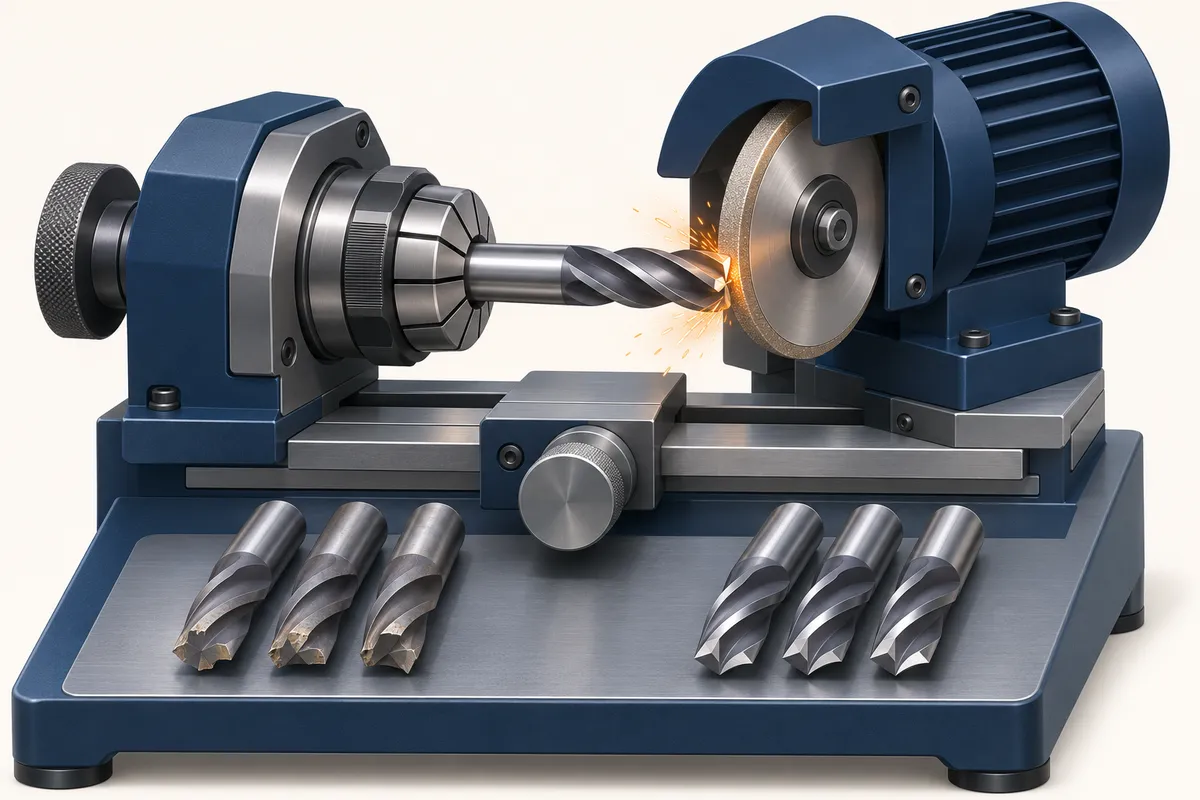
In plain words
Like sharpening a kitchen knife instead of throwing it away, an expensive blunt cutter can be resharpened and recoated, usually several times. Each sharpening grinds a little off, so the cutter comes back slightly shorter or thinner, and the machine must be told its new size.
What it is
Worn cutters are often sharpened again instead of thrown away. Solid carbide drills, end mills and reamers go to a regrinding service or an in-house CNC tool grinder, which grinds fresh edges, and they are often recoated; a solid drill typically survives several regrinds, each at a fraction of the price of a new tool. Many shops still sharpen high-speed steel drills and brazed carbide lathe tools by hand. Each regrind removes material: a drill comes back shorter, and an end mill reground on its sides comes back smaller in diameter. The tool must then be measured on a presetter and given new length and diameter values, and a program written for the original size may need a new offset or toolpath. Regrind quality varies. Indexable inserts (65) are usually not reground in job shops; each edge is used in turn and the insert is then scrapped or sent out for regrinding.
Why it matters for products
Tool cost per part spreads the new price plus every regrind over the total life across all regrinds, and tool management (92) tracks each tool's regrind count, current size and remaining length.
Learn first
Making a part like this? Plan the process and estimate costs in Workspace.