



Stock forms: rolled, drawn and extruded
原材料形态:轧制、冷拉与挤压型材
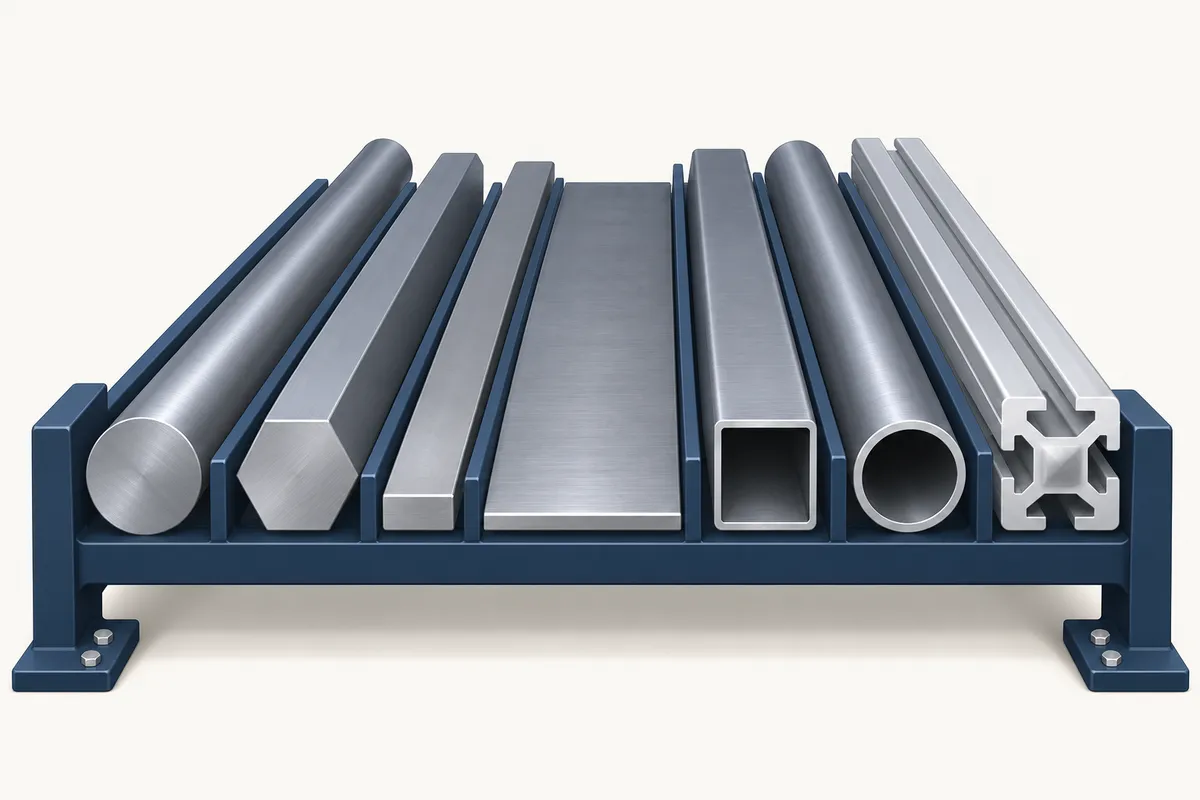
In plain words
Metal reaches the workshop already shaped as long bars, flat plates, tubes or special cross-sections, a bit like pasta sold as spaghetti, lasagne sheets or tubes. Some is rolled red hot and comes rough and scaly; some is pulled through a die cold and comes smooth and exact. Picking the form closest to the part saves cutting.
What it is
Hot-rolled bar and plate are rolled red hot: cheap, covered in scale, loose in size and not very straight, so every face that must meet a finished size or surface needs a clean-up cut. Cold-drawn bar (冷拉, also called bright bar) is pulled through a die cold, so it is close to size, smooth and straight enough to hold in a collet and leave its outside unmachined, though it carries more locked-in stress (86). Aluminium plate is rolled and usually stretched; cast tooling plate is flatter and more stable. Cold-rolled sheet is smoother and more accurate, and tube comes seamless or welded. Extruded profiles (挤压型材) are pushed through a shaped die: angles, channels, heat-sink sections, or a custom shape whose die costs extra but saves most of the roughing on long parts. Ground flat stock and blocks milled square on all six sides save squaring, and castings and forgings (130) sit at the near-shape end. Each form has its table of standard sizes.
Why it matters for products
Stock selection picks the form and the smallest standard size that contains the part plus its allowances (180), and the price per kilogram depends on the form as well as the alloy (110).
Learn first
Making a part like this? Plan the process and estimate costs in Workspace.