



Straightening
校直与校形
In plain words
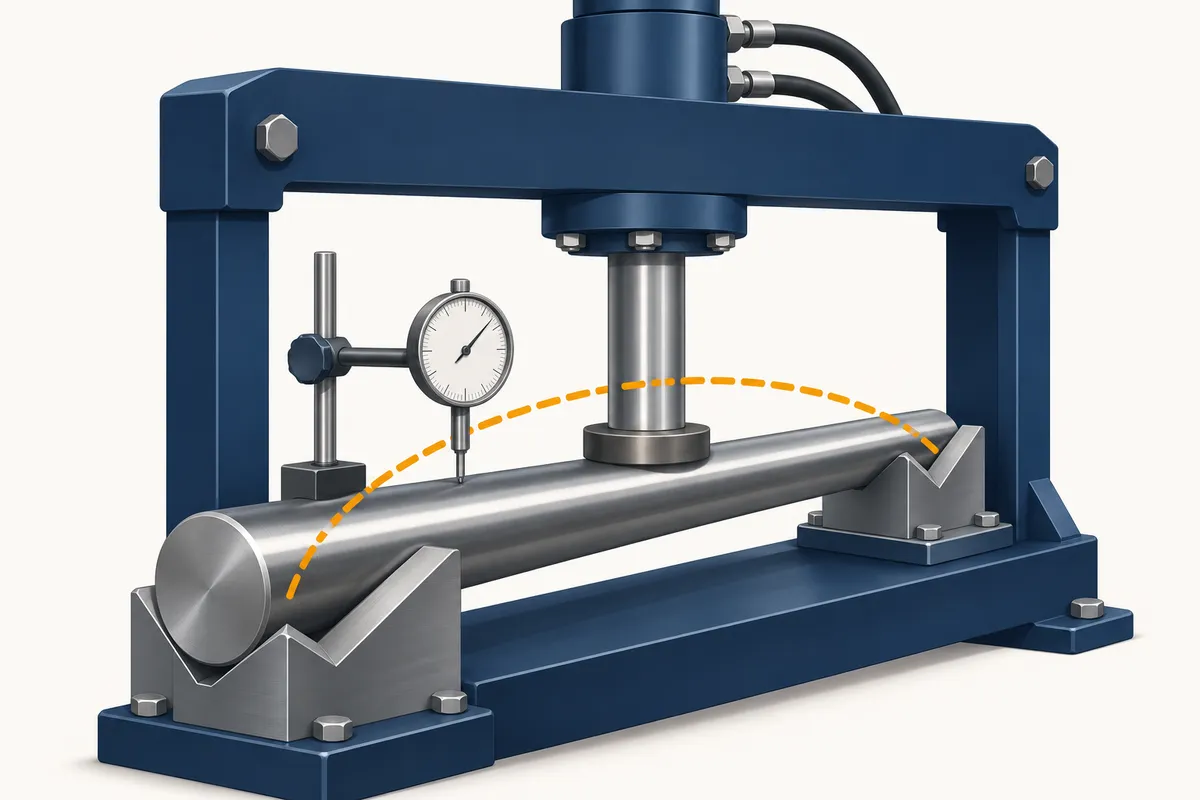
A long thin shaft often comes out of the heat-treatment oven slightly bent, like a banana. It is laid on two supports and pressed at the high point, or tapped on the hollow side, a little at a time, while a dial gauge shows how much it still wobbles when turned. Hard parts can crack if pushed too far, so it takes skill and time.
What it is
Long, thin parts come out of heat treatment, heavy roughing and even the steel mill slightly bent, and are straightened, sometimes several times along one routing. In press straightening (校直) the shaft lies on two V-blocks, a press pushes the high point down a little past straight, and a dial indicator checks the runout again with the shaft turning between centres (171); the cycle repeats until it is within limits. Hardened shafts can crack under the press, so they are pushed carefully, sometimes while still warm from tempering, or peened: light hammering on the hollow side stretches that surface and pulls the shaft straight. Large welded frames are flame straightened (149), and plate and sheet are flattened (校平) in a roller leveller. A part straightened cold keeps some stress and can creep back, so a low-temperature stress relief (164) often follows.
Why it matters for products
Straightening is a labour step that quotes often forget; a straightness or runout tolerance on a slender, heat-treated shaft implies it, with time per pass and a risk of scrap from cracks.
Learn first
Making a part like this? Plan the process and estimate costs in Workspace.